Introduction
Many learners ask the same question: how to improve their English speaking and become fluent without feeling nervous. The good news is that anyone can improve with the right strategy and consistent practice. You do not need perfect grammar or an expensive course to start speaking confidently.
However, many learners struggle with pronunciation, vocabulary, and the fear of making mistakes. Others hesitate because they translate every sentence from their native language. In this guide, you will discover practical techniques, daily exercises, and proven methods to improve spoken English naturally and confidently.
Why is English-speaking important?
English-speaking skills open many doors in today’s world. First, they help you communicate confidently in academic and professional settings. Moreover, employers often prefer candidates with strong English communication skills.
Some important benefits include:
- Better career opportunities
- Higher confidence in communication
- Easier travel and global networking
- Access to international education
- Improved professional growth
Additionally, fluent English helps you participate in meetings, interviews, and presentations with confidence.
Assess Your Current English Speaking Level
Before you start improving, understand your current level.
Identify Your Strengths and Weaknesses
Ask yourself:
- Do you struggle with pronunciation?
- Is your vocabulary limited?
- Do you hesitate while speaking?
- Do you understand English but cannot speak fluently?
Knowing your weaknesses helps you create a better learning plan.
Record Yourself Speaking
Choose a simple topic and speak for one minute. Record your voice and listen carefully.
Pay attention to:
- Pronunciation
- Grammar mistakes
- Speaking speed
- Confidence level
Set Realistic Learning Goals
Instead of saying, “I want to become fluent,” create specific goals.
For example:
| Goal | Time Frame |
| Learn 10 new words daily | 1 month |
| Speak English for 15 minutes daily | 30 days |
| Improve pronunciation | 3 months |
| Practice conversation twice a week | Ongoing |
15 Effective Ways to Improve Your English Speaking

1. Speak English Every Day
Daily practice is the fastest way to improve.
Even if you speak for only ten minutes, you build confidence and fluency. Therefore, create a daily English-speaking practice routine.
2. Think in English
Many learners translate from their native language. As a result, speaking becomes slow.
Instead, think directly in English. Start with simple thoughts like:
- I am making tea.
- I need to finish my work.
- The weather is pleasant today.
Gradually, your brain will use English naturally.
3. Improve Your English Vocabulary
Vocabulary plays a major role in fluent communication.
Learn:
- Everyday words
- Common phrases
- Business vocabulary
- Travel vocabulary
Moreover, use new words immediately in conversations.
4. Listen to Native English Speakers
Listening improves both pronunciation and fluency.
You can use:
- Podcasts
- YouTube videos
- Audiobooks
- News channels
Furthermore, repeat sentences aloud to copy pronunciation and rhythm.
5. Practice English Conversation Regularly
English conversation practice is essential.
Join:
- Speaking clubs
- Online language exchange groups
- Conversation classes
- Study groups
The more you speak, the more comfortable you become.
6. Read English Books and Articles Aloud
Reading aloud improves the following:
- Pronunciation
- Confidence
- Fluency
- Vocabulary
Additionally, it helps you understand sentence structure naturally.
7. Watch English Movies and TV Shows
Movies teach conversational English and natural expressions.
For example, watch:
- Sitcoms
- Educational videos
- Interviews
- English documentaries
Meanwhile, turn on subtitles if necessary.
8. Focus on Pronunciation
Many learners know grammar but struggle with pronunciation.
To improve English pronunciation:
- Listen carefully to native speakers
- Practice difficult sounds
- Record yourself regularly
- Repeat words slowly
Small improvements create a big difference over time.
9. Learn Common English Phrases
Instead of memorizing isolated words, learn complete phrases.
Examples:
- How are you doing?
- Nice to meet you.
- Could you help me?
- I appreciate your support.
Consequently, you can speak more naturally.
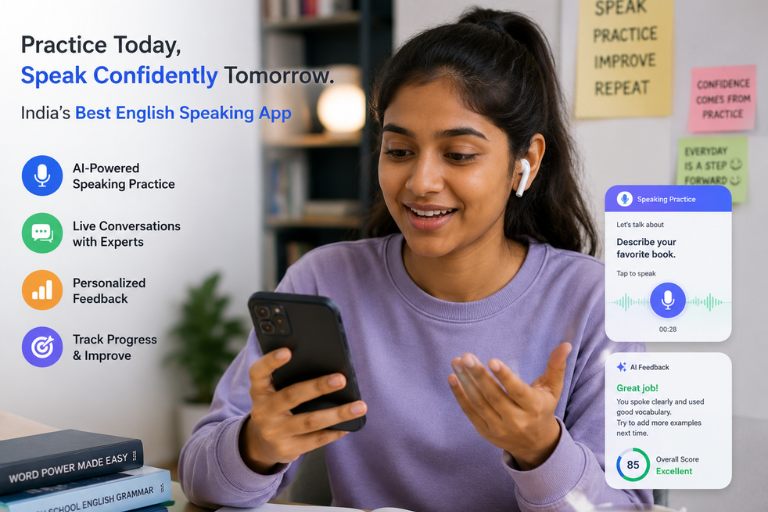
10. Use English Learning Apps
Technology makes learning easier.
Popular options include:
- Vocabulary apps
- Pronunciation apps
- Conversation practice apps
- Grammar learning apps
Additionally, many apps offer daily speaking exercises.
11. Join a Spoken English Course
A structured spoken English course for beginners provides the following:
- Expert guidance
- Regular speaking sessions
- Personalized feedback
- Better motivation
Therefore, many learners progress faster in a guided environment.
12. Practice Speaking in Front of a Mirror
Mirror practice may feel strange initially. However, it is highly effective.
It helps you:
- Build confidence
- Improve body language
- Reduce nervousness
- Practice facial expressions
Speak on any topic for five minutes daily.
13. Record and Analyze Your Speech
Recording your voice helps you identify mistakes.
Review:
- Pronunciation errors
- Grammar mistakes
- Speaking speed
- Vocabulary usage
As a result, you can track progress clearly.
14. Don’t Be Afraid of Making Mistakes
Fear is one of the biggest barriers to fluency.
Remember:
- Everyone makes mistakes.
- Mistakes help you learn.
- Confidence grows with practice.
Therefore, focus on communication rather than perfection.
15. Be Consistent and Patient
Fluency does not happen overnight.
However, regular practice creates lasting results.
Create a routine that includes:
- Speaking English daily
- Listening exercises
- Reading aloud
- Vocabulary building
- Conversation practice
Consistency always beats intensity.
How to Improve English Speaking at Home

You can effectively improve your English speaking at home.
Try these methods:
- Create an English-speaking environment.
- Watch English videos daily.
- Practice with family or friends.
- Read English newspapers aloud.
- Use online resources effectively.
Additionally, speak to yourself in English during everyday activities.
How to Improve English Speaking for Beginners
Beginners should focus on simple habits.
Start by:
- Learning basic English speaking skills
- Practicing short conversations
- Building vocabulary gradually
- Listening to simple English content
Moreover, do not worry about mistakes in the beginning.
How to Improve English Speaking for Job Interviews
Interview English requires confidence and preparation.
Focus on:
- Professional vocabulary
- Common interview questions
- Clear pronunciation
- Confident body language
Furthermore, practice mock interviews regularly.
Common Mistakes That Stop You From Speaking English Fluently
Many learners repeat these mistakes:
Translating From Your Native Language
Thinking in your native language slows your speaking speed.
Focusing Too Much on Grammar
Grammar is important. However, communication matters more.
Lack of Regular Practice
Speaking once a week is not enough.
Daily speaking habits produce better results.
Fear of Making Mistakes
Fear reduces confidence.
Instead, treat mistakes as learning opportunities.
Can You Improve English Speaking in 30 Days?
Yes, you can make significant progress in 30 days.
Sample 30-Day Plan
| Week | Focus |
| Week 1 | Vocabulary and pronunciation |
| Week 2 | Daily conversations |
| Week 3 | Listening and speaking practice |
| Week 4 | Mock conversations and fluency |
However, complete fluency requires long-term practice and consistency.
Best Resources to Improve English Speaking
Here are some excellent resources:
YouTube Channels
Watch channels that focus on:
- Pronunciation
- Conversational English
- Vocabulary building
Podcasts
English podcasts improve listening skills and fluency.
Mobile Apps
Use apps for:
- Speaking practice
- Vocabulary
- Pronunciation
Online Spoken English Courses
Structured courses offer guidance and accountability.
English Books for Beginners
Choose books with simple language and everyday conversations.
Conclusion
Now you know how to improve your English speaking through daily habits, smart practice, and consistent effort. Start with small steps, speak every day, and focus on communication instead of perfection.
Moreover, remember that fluency is a journey. Stay patient, keep learning, and practice regularly. Start improving your English speaking today with expert guidance and consistent practice to become a confident English speaker.
Frequently Asked Questions (FAQs)
Q: How can you improve your English speaking skills?
To improve your English speaking skills, practice speaking every day, learn new vocabulary, and listen to native speakers regularly. Additionally, read aloud, think in English, and participate in conversations to build confidence and fluency over time.
Q: How to improve your English speaking skills by yourself?
You can improve your English speaking skills on your own by creating a daily practice routine. Speak in front of a mirror, record your voice, watch English videos, read books aloud, and think in English during daily activities. Consistency is the key to success.
Q: How to improve your English speaking skills by yourself (PDF)?
A self-study PDF should include daily speaking exercises, vocabulary lists, pronunciation practice, common phrases, and conversation topics. Follow the exercises regularly and track your progress to effectively improve your speaking skills.
Q: How to improve your English speaking skills and grammar?
Improve your English speaking skills and grammar by learning grammar rules gradually and applying them while speaking. Moreover, practice sentence formation, read English articles, and speak regularly to use grammar naturally in conversations.
Q: How to improve your English speaking skills and vocabulary?
To improve both speaking skills and vocabulary, learn new words daily and use them in sentences and conversations. Furthermore, read books, listen to podcasts, and maintain a vocabulary notebook to remember and practice new words.
Q: How to improve your English speaking skills by yourself with an app?
You can use English learning apps that offer speaking practice, pronunciation exercises, vocabulary lessons, and conversation activities. Choose an app that provides daily exercises and interactive speaking sessions to improve consistently.
Q: How to improve your English speaking skills by yourself on YouTube?
YouTube is an excellent resource for improving English-speaking skills. Watch channels that teach pronunciation, spoken English, vocabulary, and daily conversations. Additionally, repeat sentences aloud and practice speaking along with the videos.
Q: How to improve their English speaking skills by themselves?
Students can improve their English speaking skills by reading aloud, practicing short conversations, learning new words daily, and speaking English with classmates or family members. Moreover, regular practice and confidence-building activities help students become fluent speakers.