
Introduction
Many people think that you need an expensive tutor to master a language. However, you can achieve remarkable results right from your living room. If you want to know how to improve your communication skills in English at home, you are in the right place. In this comprehensive guide, you will learn practical steps to build your confidence and polish your speech. Furthermore, you will discover daily habits that transform your language learning experience. Let us dive into the ultimate strategies for self-improvement.
Why It Is Important to Improve Communication Skills in English at Home
Learning a language in your personal space offers a comfortable environment. Therefore, you can practice without the fear of immediate judgment from others.
Benefits for Students and Working Professionals
Strong English communication skills open incredible doors in the modern global economy. For instance, students can clear competitive exams and easily understand complex global academic research. Meanwhile, working professionals with strong verbal communication skills secure promotions more quickly and lead corporate meetings effectively.
How Strong English Communication Builds Confidence
When you look for ways to improve your English communication skills, you are actually building personal empowerment. Expressing your thoughts clearly makes you feel valued in social groups. As a result, you stop hesitating during critical public interactions.
How to Improve Communication Skills in English at Home with Daily Practice
Consistency is the absolute secret to mastering any new language. A small, intentional routine yields massive results over time.
Create a daily English-speaking routine.
First, set aside twenty minutes every morning for a structured English learning routine. You can start your daily English practice by reading an online article out loud. Additionally, try to repeat common phrases to anchor your muscle memory.
Practice Speaking in Front of a Mirror

This classic method works wonders for tracking your body language and mouth movements. Stand straight, look at yourself, and speak for two minutes on any random topic. This active English-speaking practice at home helps you correct facial stiffness and boosts your speaking confidence quickly.
Think in English Throughout the Day
Most learners translate sentences from their native language to English inside their heads. However, this habit slows down your speech and causes unnatural pauses. Therefore, you should consciously try to think in English by naming objects around you in English.
Best Ways to Improve Spoken English and English Conversation Skills
Shifting from basic comprehension to natural execution requires targeted fluency improvement tactics.
Learn Common English Phrases and Expressions
Instead of memorising isolated words, focus heavily on multi-word expressions. For example, use standard idioms and daily greetings to make your conversations sound natural. This approach directly sharpens your overall English conversation skills.
Improve Your Pronunciation and Accent
Clear communication depends entirely on being understood easily by listeners. Spend a few minutes on focused pronunciation practice to master tricky vowel sounds. Remember, accent improvement is not about sounding like a native speaker; it is about absolute clarity.
Build Strong English Vocabulary at Home
You can easily jumpstart your improved English vocabulary at home by tracking unfamiliar words daily. Read books, write down new terms, and use them in sentences immediately. Consequently, your English vocabulary-building efforts will prevent you from getting stuck mid-sentence.
Improve Listening and Speaking Skills in English Effectively
Listening and speaking are two sides of the same coin. You cannot become a great speaker without becoming an active listener.
Listen to Podcasts, Audiobooks, and English Videos

Expose your brain to authentic conversations by turning on high-quality educational audio content. Pay close attention to how speakers use pauses, emphasis, and tone. This improves your core listening skills while keeping you entertained.
Repeat and Shadow Native Speakers
Shadowing is one of the most powerful language learning techniques available today. Listen to a short audio clip and mimic the speaker instantly with a minimal delay. This method directly trains your tongue to master the natural rhythm of the language.
Record Your Voice and Track Progress
Most people dislike hearing their own recorded voice. Nevertheless, it is a brilliant diagnostic tool to find recurring grammatical errors. Record yourself daily, analyse the gaps, and watch your confidence in speaking English grow week after week.
Practical Activities to Improve Communication Skills in English At Home
You do not need an interactive partner to become a great communicator. There are excellent ways to practice completely by yourself.
English Conversation Practice Alone
If you wonder how to practice English conversation alone, try role-playing common daily scenarios. Imagine you are ordering a coffee, complaining about a delayed product, or presenting a new business project. This solo conversation practice prepares your brain for real-life interactions.
English Speaking Exercises at Home
Use simple English speaking exercises at home, like describing a picture in detail for one minute. Alternatively, try to summarise the plot of the last movie you watched out loud. These English-speaking exercises build instant mental agility.
Use AI Tools and Language Learning Apps
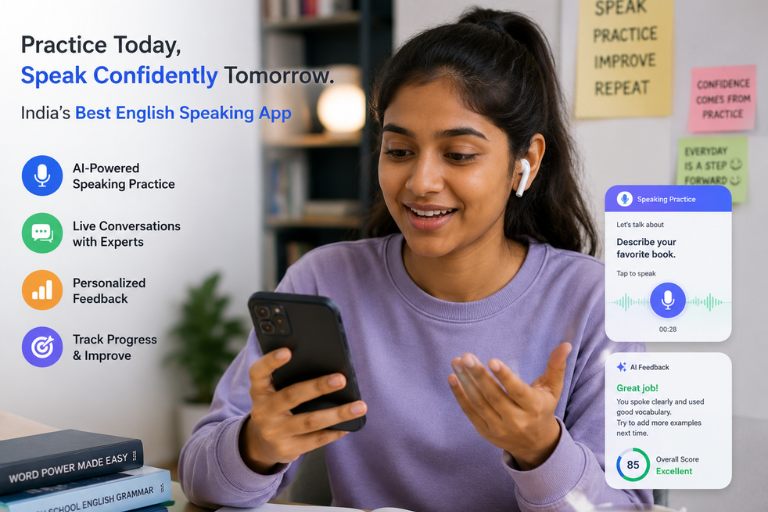
Technology makes self-study incredibly engaging and accessible. You can chat with advanced AI models or use dedicated apps for real-time speech correction. These tools function like a free spoken English course online, guiding your journey seamlessly.
Common Mistakes That Slow Down English Fluency
Identifying what to avoid is just as crucial as knowing what actions to take.
Focusing Too Much on Grammar
While basic English grammar practice provides structure, overthinking rules kills your natural flow. Native speakers prioritise smooth delivery over strict textbook perfection. Therefore, focus on continuous communication first and technical details later.
Being Afraid of Making Mistakes
Fear acts as a massive barrier to achieving high English fluency. Mistakes are simply proof that you are trying to grow. Accept them as natural data points on your path to speaking English fluently.
Not Practicing Consistently
Binge-learning for five hours on a Sunday will not help you improve spoken English effectively. On the other hand, practicing for fifteen minutes every day builds permanent neural pathways.
How Long Does It Take to Improve Communication Skills in English at Home?
Every individual moves at a unique pace depending on their starting baseline.
| Learner Level | Recommended Daily Practice | Estimated Time for Noticeable Progress |
| Beginner | 30 Minutes | 3 to 6 Months |
| Intermediate | 20 Minutes | 2 to 4 Months |
Factors That Affect Learning Speed
Your current exposure level, dedication, and practice methods dictate your overall growth rate. For instance, active speaking yields much faster results than passive reading.
Realistic Timeline for Beginners and Intermediate Learners
If you follow a strict daily practice for English speaking, expect visible changes in a few months. Beginners can learn to frame basic sentences easily within ninety days. Meanwhile, intermediate learners can learn how to speak English fluently and confidently with consistent six-month tracking.
Tips to Stay Motivated While Learning English at Home
The initial excitement of learning a language can fade quickly without structure.
Set Small and Achievable Goals
Do not aim to speak like a professional orator in your first week. Instead, aim to talk for two minutes without stopping. Small milestones keep frustration away.
Track Your Daily Progress
Maintain a simple journal to check off your completed daily exercises. Seeing a visual streak of your consistency prevents you from giving up on tough days.
Celebrate Small Wins
Did you complete a multi-step conversation without translating from your native language? If yes, celebrate that breakthrough. Acknowledging your growth builds lasting momentum.
Conclusion
To conclude, figuring out how to improve communication skills in English at home is an empowering journey that requires no expensive setup. By setting up a dedicated routine, using mirror exercises, and listening actively, you can achieve remarkable English speaking skills. Stay consistent, do not fear errors, and practice daily to build unmatched confidence.
Transform your English skills. Join our online or face-to-face classes today!
How can I improve my communication skills in English at home?
You can build your skills by maintaining a strict daily reading aloud routine, recording your voice, and practicing shadowing techniques with native audio clips.
What are the best ways to improve spoken English?
The best ways to improve spoken English involve shifting your thinking process into English, expanding your daily phrase vocabulary, and conducting regular mirror-speaking sessions.
How do I speak English fluently and confidently at home?
Focus on real-time communication improvement rather than chasing flawless grammar, use interactive AI apps daily, and accept mistakes as part of the normal learning journey.
How can beginners practice English speaking every day?
Beginners should start with basic English speaking tips for beginners, such as describing surrounding household objects, repeating short dialogues, and reading children’s books out loud.