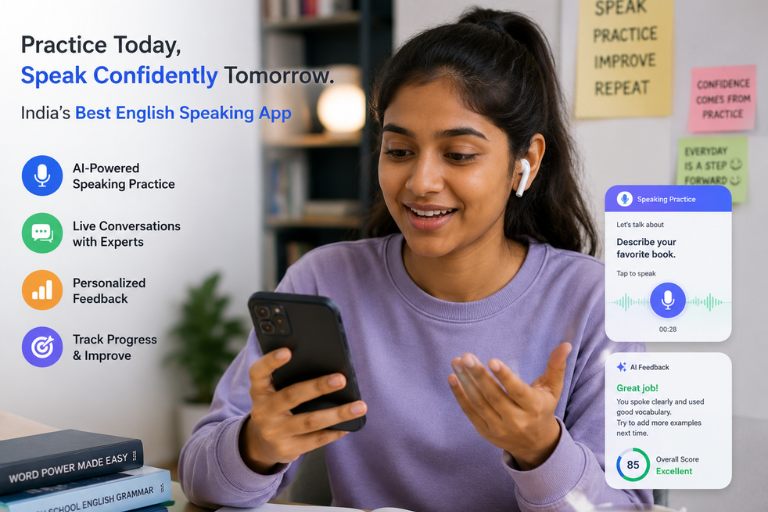

Introduction
If you’ve ever wondered how to improve English speaking fluency, you’re not alone. Many English learners understand grammar and vocabulary but hesitate when speaking. The good news is that fluency doesn’t require perfect English. Instead, it comes from regular speaking practice, the right learning techniques, and the confidence to communicate without fear.
Whether you’re preparing for a job interview, planning to study abroad, improving your English communication skills, or simply wanting to speak naturally in everyday situations, this guide will help you. You’ll learn practical techniques, daily habits, useful resources, and proven strategies to improve your English-speaking skills naturally.
By following these methods consistently, you’ll gradually speak English fluently, improve your pronunciation, expand your vocabulary, and communicate with confidence.
What Does It Mean to Improve English Speaking Fluency?
Many learners think fluency means speaking exactly like a native speaker. However, fluency is actually the ability to express your ideas clearly, naturally, and confidently without frequent pauses.
A fluent speaker may still make small grammar mistakes but continues speaking smoothly instead of stopping to think about every word.
Difference Between Fluency, Accuracy, and Pronunciation
Understanding these three skills helps you focus on balanced improvement.
| Skill | Meaning | Why It Matters |
| Fluency | Speaking smoothly without long pauses | Makes conversations natural |
| Accuracy | Using correct grammar and vocabulary | Improves clarity |
| Pronunciation | Saying words correctly | Makes speech easier to understand |
Many learners spend years studying English grammar for speaking but rarely participate in real conversations. As a result, they know grammar rules but struggle to communicate confidently.
Instead of focusing only on grammar, work on all three areas together.
Signs You Are Becoming More Fluent
You can measure your progress by noticing these changes:
- You think less before speaking.
- You understand conversations more easily.
- You use common English expressions naturally.
- You participate in discussions confidently.
- You pause less while speaking.
- You translate less in your mind.
- Your pronunciation becomes clearer.
Remember that fluency develops gradually. Every conversation helps improve your English language proficiency.
How to Improve English Speaking Fluency Every Day
Daily practice is more effective than studying for several hours once a week. Small, consistent habits help you build confidence and improve your spoken English over time.
Think in English Instead of Translating
One of the biggest barriers to fluency is translating every sentence from your native language before speaking.
Instead, train yourself to think directly in English.
For example, rather than translating “I need to buy groceries,” simply think about it in English.
Start with everyday thoughts such as:
- I’m getting ready for work.
- The weather looks nice today.
- I need to finish this task.
- I’ll call my friend later.
This simple habit reduces hesitation and strengthens your English speaking habits.
Speak English Daily, Even if You’re Alone
Many learners wait until they find an English speaking partner, but you can practice effectively on your own.
Try activities like:
- Describing your surroundings
- Talking about your daily routine
- Explaining your plans
- Retelling a movie or story
- Answering interview questions
- Discussing current events
Even 15 minutes of daily English speaking practice can improve your confidence.
Mirror speaking is another useful technique. Stand in front of a mirror and speak for five minutes while maintaining eye contact. This exercise improves both confidence and speaking clarity.
Build a Strong Vocabulary Through Context
Learning vocabulary through complete sentences is far more effective than memorizing long word lists.
For example:
❌ Opportunity
✅ This internship gave me a great opportunity to improve my skills.
This approach helps you remember and use new words naturally.
Focus on learning:
- English collocations
- Use English sentences daily
- Common English expressions
- English idioms
- English speaking vocabulary
Reading articles, blogs, and books regularly also supports English vocabulary building.
Learn Common English Phrases and Expressions
Native speakers often use common expressions instead of creating every sentence from scratch.
Examples include:
- How’s it going?
- That sounds great.
- I couldn’t agree more.
- It depends.
- As far as I know.
- In my opinion.
- To be honest.
Using these phrases makes your conversational English sound more natural.
Try adding a few new expressions to your conversations every week.
Practice Clear Pronunciation and Intonation
Good pronunciation is about being understood, not sounding exactly like a native speaker.
Focus on:
- Word stress
- Sentence stress
- Connected speech
- Intonation
- Difficult sounds
Reading aloud for ten minutes every day is one of the easiest English pronunciation practice exercises.
You can also imitate native speakers by listening carefully and repeating their sentences. Recording yourself regularly helps identify pronunciation mistakes and track your progress.
Common Mistakes That Slow Down English Speaking Fluency
Many learners work hard but still struggle to become fluent because they repeat the same mistakes. Recognizing these habits can help you improve faster and avoid unnecessary frustration.
Fear of Making Mistakes
One of the biggest obstacles to fluency is the fear of speaking incorrectly. Many learners avoid conversations because they worry about grammar, pronunciation, or making embarrassing mistakes.
However, mistakes are a natural part of learning any language. Every conversation teaches you something new and helps you improve. Even native speakers make occasional mistakes, but they continue speaking with confidence.
Instead of aiming for perfect English, focus on expressing your ideas clearly. The more you speak, the more your confidence and fluency will grow.
Focusing Too Much on Grammar
Grammar is important, but it shouldn’t prevent you from speaking. Many learners spend months studying grammar rules without practicing real conversations.
Learn grammar step by step, but make speaking your priority. As you participate in more conversations, you’ll naturally become more comfortable using grammar correctly.
If your goal is to improve fluency without grammar becoming a barrier, spend more time listening and speaking than memorizing rules.
Lack of Consistent Speaking Practice
Reading books, watching videos, and learning vocabulary are helpful, but they cannot replace speaking practice. Fluency develops only when you actively use the language.
Make speaking part of your daily routine by:
- Speaking aloud for a few minutes each day
- Practicing with a friend or language partner
- Joining online conversation groups
- Using AI-powered speaking tools
- Recording yourself regularly
Even 15 minutes of English speaking practice at home every day produces better results than several hours of practice once a week.
Memorizing Without Using the Language
Many learners memorize hundreds of vocabulary words but struggle to use them in conversations. Simply remembering words is not enough.
Whenever you learn a new word or phrase:
- Create your own sentence.
- Use it in a conversation.
- Write it in a notebook.
- Review and repeat it throughout the week.
Using vocabulary in real situations helps move it into your long-term memory and improves your spoken English naturally.
How Long Does It Take to Improve English Speaking Fluency?
There is no fixed timeline for becoming fluent because every learner progresses at a different pace. Your improvement depends on your current level, daily practice, and consistency.
With regular speaking practice, many learners notice visible improvement within two to three months.
Factors That Affect Learning Speed
Several factors influence how quickly you improve:
- Your current English level
- Daily speaking practice
- Listening habits
- Vocabulary knowledge
- Confidence
- Learning environment
- Consistency
Someone who practices every day will usually improve much faster than someone who studies only occasionally.
Setting Realistic Goals and Tracking Progress
Setting realistic goals keeps you motivated and helps you measure your improvement.
For example:
| Time | Goal |
| Week 1 | Introduce yourself confidently |
| Week 2 | Hold a two-minute conversation |
| Month 1 | Speak for five minutes without translating |
| Month 3 | Participate comfortably in discussions |
| Month 6 | Communicate confidently in professional or academic situations |
Track your progress by recording your voice, keeping a speaking journal, or completing regular self-assessments. Looking back at your earlier recordings will show how much you’ve improved.
Tips to Stay Motivated While Improving English Speaking Fluency
Learning English is a long-term journey. Staying motivated is just as important as practicing every day.
Set Achievable Milestones
Instead of focusing only on becoming fluent, divide your goal into smaller achievements.
For example:
- Learn ten new words this week.
- Practice speaking every day for seven days.
- Complete one English conversation each week.
- Finish one English book this month.
Achieving these milestones builds confidence and keeps you motivated.
Find a Speaking Partner
Practicing with another person makes learning more enjoyable and helps you stay consistent.
You can find speaking partners through:
- Language exchange websites
- Online communities
- English speaking clubs
- Social media groups
- AI conversation platforms
Regular conversations improve your fluency, pronunciation, and confidence much faster than studying alone.
Celebrate Small Improvements
Don’t wait until you’re fluent to celebrate your progress. Every improvement is a step toward your goal.
Celebrate when you:
- Learn new vocabulary
- Complete a week of daily practice
- Understand an English video without subtitles
- Hold your first confident conversation
- Deliver a presentation in English
Recognizing your achievements keeps you motivated and encourages you to continue learning.
Conclusion
Learning how to improve English speaking fluency is a gradual process that requires consistency, patience, and regular practice. You don’t need perfect grammar or a native accent to communicate confidently. Instead, focus on speaking every day, thinking in English, expanding your vocabulary through context, improving your pronunciation, and practicing with real conversations.
Use techniques like shadowing, mirror speaking, reading aloud, and AI-powered speaking tools to strengthen your skills. Whether you’re learning for work, study abroad, interviews, or everyday communication, consistent effort will help you become a more confident speaker.
Remember that fluency is built through small daily improvements. Stay motivated, practice regularly, and don’t be afraid to make mistakes. Every conversation brings you one step closer to speaking English naturally and confidently.
FAQs
How can I improve English speaking fluency at home?
You can improve at home by reading aloud, practicing mirror speaking, recording yourself, watching English videos, listening to podcasts, and using AI-powered speaking tools. Speaking for at least 15–30 minutes every day will help you build confidence and fluency.
What is the fastest way to improve English speaking fluency?
The fastest way is to combine daily speaking practice with listening to native speakers, using the shadowing technique, learning vocabulary in context, and having regular conversations with a speaking partner or AI tutor.
Can I become fluent in English without joining a coaching institute?
Yes. Many learners become fluent through self-study using online courses, YouTube channels, language-learning apps, podcasts, AI tools, and consistent speaking practice. Coaching can provide guidance, but regular practice is the most important factor.
How many minutes should I practice English speaking every day?
Beginners should practice for 15–20 minutes daily. Intermediate and advanced learners should aim for 30–60 minutes, combining speaking, listening, reading, and pronunciation exercises for balanced improvement.
Which apps are best for improving English speaking fluency?
Some of the best apps include Duolingo, ELSA Speak, Cake App, HelloTalk, Tandem, and Cambly. These apps help improve pronunciation, vocabulary, conversation skills, and overall fluency.
How can beginners improve English speaking fluency confidently?
Beginners should start with simple conversations, think in English, learn common phrases, read aloud, practice mirror speaking, and speak every day without worrying about making mistakes. Confidence develops naturally through consistent practice.